Latest News

The Capacity Building Grant Program

The Sewage-Free Streets and Rivers campaign funded partner organizations to conduct public outreach. The goal was to educate families, small businesses, and community members on the impacts of combined sewer overflows. Public outreach provides opportunities for community input in the development of solutions and education on the benefits of green infrastructure. 

Here is a report back on some of the activities that were held as part of the Sewage-Free Streets and Rivers capacity building grant program.  
The Perth Amboy Civic Trust held a Solutions Forum on Combined Sewage Overflows (CSO’s) on Wednesday, June 19, 2019, at the Alexander Jankowski Community Center. Civic Trustees and community leaders gathered together to learn about the issues with stormwater drainage and its effects on our waterways, but more importantly, they learned that CSO’s will cost residents millions of taxpayer dollars if they don’t begin addressing the problem together. At the forum, panelists spoke about policies that could be adopted to help address this issue and what they believe should be included as part of the plan. Having the community involved in these discussions helps generate more solutions that can potentially be adopted and help save taxpayer dollars.

The Perth Amboy Civic Trust will host a second Solutions Forum on Combined Sewage Overflows that will focus on alternative solutions. To RSVP: https://docs.google.com/forms/d/e/1FAIpQLSf-pNep9mFGFVXq6L0UBDlo3wJ3Kuxb3NT77ashZ9IerahJgQ/viewform, or email Joel@thecitizenscampaign.org. 
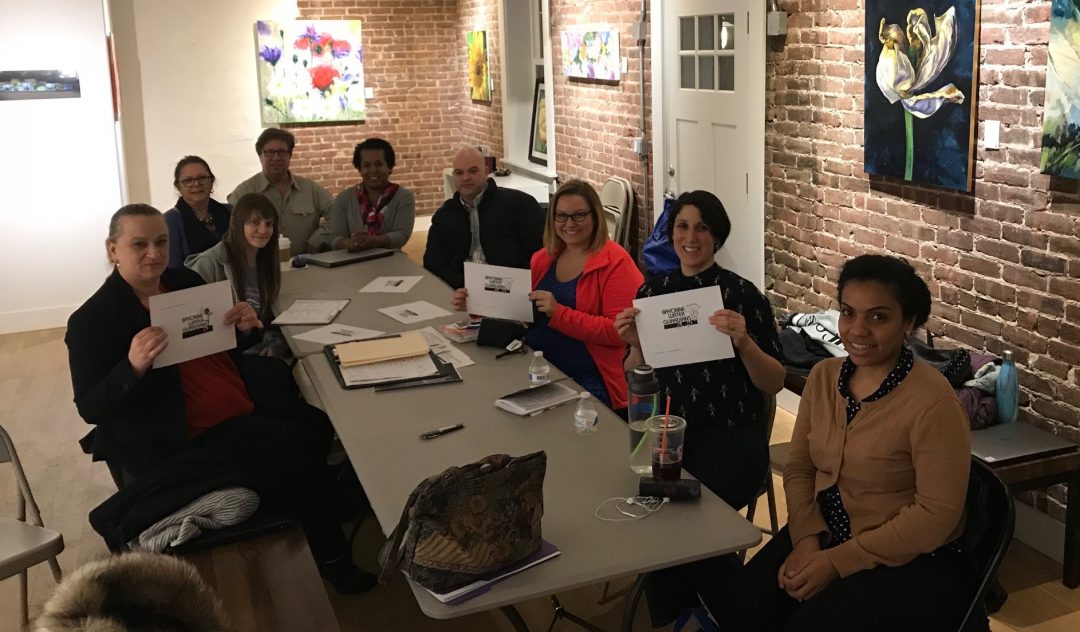
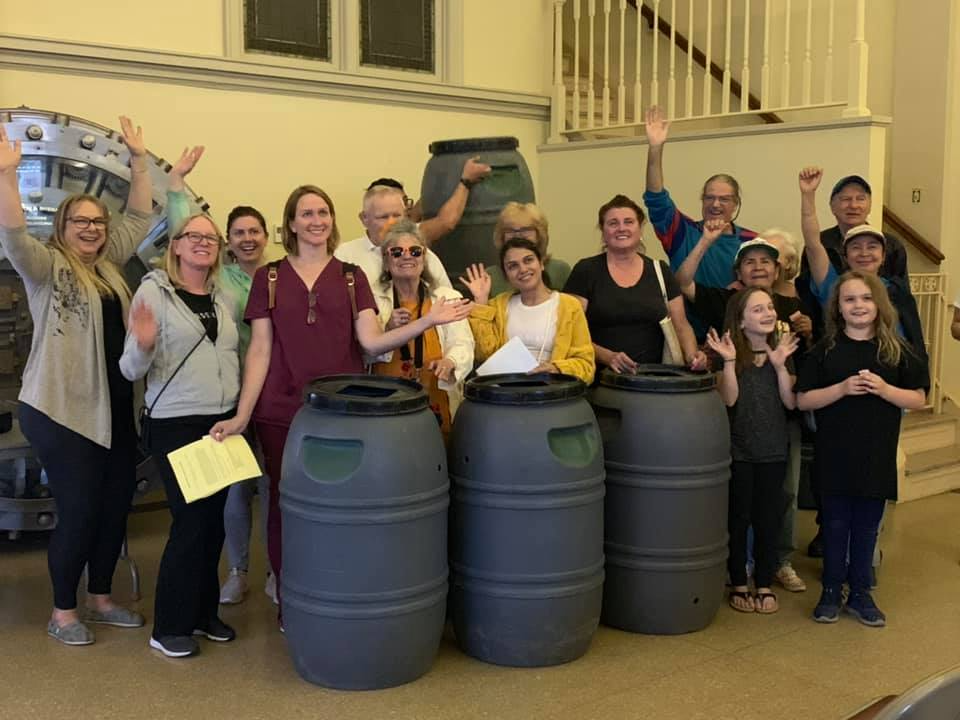
On May 22nd the Bayonne Water Guardians held a rain barrel workshop where 17 rain barrels were raffled off.  Watershed Ambassador Christine Favorito gave an educational presentation on rain barrel use, rain gardens, and how citizens can participate in mitigating flooding that can occur during rainstorms.  Tim Boyle, Executive Director Bayonne Municipal Utility Authority, also spoke about the Long Term Control Plan and what Bayonne is doing to comply with government mandates regarding CSOs. Mike Rusigelio of the Bayonne Nature Club also spoke about the importance of maintaining clean waterways and how we benefit as a community.  
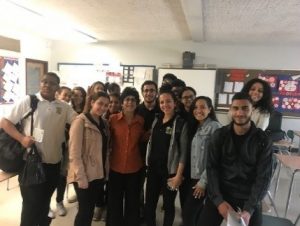
Sustainable Jersey City’s (SJC) initiative focused on assisting the Jersey City Municipal Utilities Authority (JC MUA) with their public outreach on behalf of their Long Term Control Plan (LTCP) Assessment. SJC replicated a survey that was created by the JC MUA to gather feedback and set out to collect responses from community stakeholders to share back with them. SJC got the word out through a blogpost and additional educational messaging about the LTCP and how important it was for the public to engage, and then also ran a social media campaign through the end of June to create additional awareness. The social media campaign also lent support for a project SJC set up to work with Ferris and Dickinson High School Student Council groups. In partnership with the Sewage-Free Streets and Rivers campaign, SJC gave presentations at high schools to provide context and to educate the students about the stormwater management issues and the various options the JC MUA LTCP were considering to address these challenges. The students volunteered to reach out to other students, parents and their communities to share the educational materials and messaging SJC provided them. SJC used the funding from the Capacity Building Grant to provide Amazon Gift Cards to the 22 students who participated in the campaign, also giving them Civic Service Certificates for their hard work. The Students were also treated to lunch the week before the semester ended!
 

Potential Solutions

All of the Evaluation of Alternatives reports will soon be made public. On July 1, 2019, the Development and Evaluation of Alternatives reports are due to the NJDEP and will be posted online.

Although this is not the final selection of solutions to combined sewer overflows, this report will provide an idea of the directions the CSO plans are taking, including, for example, how much green or gray is your city considering and how much it will cost. The report includes an evaluation of each of the seven technologies required for review in the permit and more. Each of the alternatives are evaluated based on meeting water quality and CSO reduction goals. Recommendations on which alternatives and/or combination of alternatives will also be included.  

What is the NJDEP looking for?

The NJDEP will begin a review of the reports once they are submitted on July 1, 2019. The NJDEP will be looking to make sure each of the 7 alternatives were considered and that the reports present a few options or combination of options.  They will also be looking at how public input was taken into consideration.

What happens next?

Once the NJDEP has reviewed the reports, permit holders will receive comments. These comments will be extremely important as permit holders go  on to develop the final Long Term Control Plan. Members of the public can, and should, also send comments to the NJDEP while the reports are being reviewed.

What can you do now?

Over the last few months, Supplemental CSO Team members and some members of the public have seen draft reports and presentations on their evaluation of alternatives. If you were not able to attend these meetings, ask the utility or municipality who owns the combined sewer outfalls to share the evaluation of alternatives presentations or reports. Use the CSO Directory to find your CSO contact.

Who’s in charge of fixing your sewers?

Do you live in a community with a combined sewer system? Do you know who is responsible for developing a plan to stop sewage overflows?

The Sewage-Free Streets and Rivers campaign launched a CSO directory to help connect you with the people who are in charge of sewage overflows in your town. The directory lists the cities with combined sewer systems in New Jersey and the sewer treatment plants that service these communities.

Check out the directory to find out about upcoming meetings, your municipal or utility CSO contact information, your CSO permit holder, and where they are posting information online.


Make Your Voice Heard During #InfrastructureWeek!

Infrastructure Week is almost here! This is a national week of events, from May 13 to May 20, that highlight the need to invest in all kinds of infrastructure.

If you live, work, or run a business in a community with a combined sewer system, you know that one of the must urgent infrastructure investment priorities has to be our sewer systems. Municipalities and utilities must develop plans to reduce the combined sewer overflows (CSOs) that occur during heavy rainfall and discharge raw sewage into our neighborhoods and waterways. Reducing CSOs will be a generation-long effort, that will cost billions of dollars, and result in years of construction disturbances. You as ratepayers will be asked to pay at least part of that cost.

Alternative approaches to address CSOs are being evaluated based on cost and performance, and the Sewage-Free Streets and Rivers campaign is asking that benefits to communities be included as part of the evaluation. Your input in needed now, since the Evaluation of Alternatives report is due to the state Department of Environmental Protection by July 1.

Have you made your voice heard about which alternatives you want to see included in this evaluation? Have you been able to advocate for solutions that provide local jobs, improve the health of people in your community, and address the challenges of a changing climate? Now is your chance! Municipal groups like the Bayonne Supplemental CSO Team and regional groups like Bergen County CSO Group and North Hudson Sewerage Authority are all meeting during or just after Infrastructure Week, and all of these meetings are open to the public. Find a meeting close to you, and have a say in your local stormwater infrastructure investments!  

May 14 – Bayonne Supplemental CSO Team meeting

May 15 – Bergen County CSO Group meeting for the Bergen County Utilities Authority, covering the Borough of Ridgefield Park, the Borough of Fort Lee, and the City of Hackensack

May 20 – North Hudson Sewerage Authority Supplemental CSO Team meeting for the City of Hoboken, the City of Union City, the Township of Weehawken, and the Town of West New York

May 28 – The Clean Waterways, Healthy Neighborhoods Initiative meeting for the City of Bayonne, Borough of East Newark, Town of Guttenberg, Town of Harrison, Jersey City Municipal Utilities Authority, Town of Kearny, City of Newark, City of Paterson, North Bergen Municipal Utilities Authority and Passaic Valley Sewerage Commission.

Please stay tuned for confirmation of the Perth Amboy CSO Supplemental Team meeting, which will either be on May 16 or 23  at 7 pm. For more information please contact Luis Perez Jimenez at Middlesex Water Company.

What does good public engagement look like?

All of New Jersey’s combined sewer overflow permit holders are required to conduct public outreach. But what does good public outreach look like? The Sewage-Free Streets and Rivers Advisory Committee is making recommendations to the permit holders on how to engage the public in the evaluation of alternatives.

On July 1, 2019, New Jersey combined sewer overflow permit holders will submit what are known as Development and Evaluation of Alternatives Reports, which will review the options they are considering using in their plans to stop combined sewer overflows. (The final plans are due on July 1, 2020.) This is a critical point in the development of these Combined Sewer Overflow (CSO) Long Term Control Plans (LTCPs), and the permit holders should gather input on the alternatives from the Supplemental CSO Teams and the public prior to submitting the evaluation reports to the NJDEP.

Supplemental CSO Teams are groups of stakeholders that permit holders were required to establish as part of the CSO permits. These teams are intended to be a resource to permit holders to enable them “to better develop an outreach program that reaches a broad base of citizens” (Forming and Utilizing Your CSO Supplemental Team). The permits allow team members to provide input on the evaluation of CSO control alternatives, the selection of the CSO controls, and the planning process.

At the March 7 Passaic Valley Sewerage Commission Supplemental CSO Team meeting, Bayonne, East Newark, Guttenberg, Jersey City Municipal Utilities Authority, and Bergen County Municipal Utilities Authority gave presentations options they are considering to reduce sewage overflows. Unfortunately, a number of supplemental team members were not in attendance, and there was insufficient time available for feedback from supplemental team members on how best to communicate this information to the general public.

The Sewage-Free Streets and Rivers Advisory Committee, which includes several members of the regional supplemental team, sent a letter to the permit holders that presented at the March 7 meeting with recommendations on how best to inform and engage a broad range of citizens in the evaluation of alternatives, including:

  1. In addition to the March 7 meeting, permittees should hold dynamic public workshops in their municipalities that engage the public in a discussion about the alternatives, rather than being just a one-way presentation of the alternatives being evaluated to reduce combined sewer overflows.
  2. Additional workshops should be proposed to local groups, such as green teams and environmental commissions, as should a presentation at City Council meetings. Interactions with the public should be tailored for a lay audience and focus on effectiveness, cost, combinations of solutions, and potential disruptions rather than high-level technical engineering specifics.
  3. Permittees and consultants working on the plans should detail what they considered in their evaluation of green infrastructure and community benefits. If using small-scale samples such as the Rutgers University/PVSC’s Green Infrastructure Feasibility Studies, permittees and consultants should communicate clearly that the study is a preliminary analysis of low-hanging-fruit projects and then detail how the permit holder will build upon this first effort for the larger purpose of the LTCP alternatives analysis.
  4. Permittees should focus on the information that is most critical to the public, such as flooding, floatables (e.g., litter), public access to waterfronts, affordability, green infrastructure, workforce opportunities and water quality. Presentations should begin with what will affect the public the most and at a very local level. Much of the information that was presented on March 7 was less critical for the public and diluted the purpose of communicating this information to a general audience.
  5. Presentations should include general information on the CSO permit that focuses on the process and purpose of the public’s involvement in the alternatives analysis and the implementation of the LTCP.
  6. Presentations should include sufficient time for the public to ask questions and time for the permittee to ask the public questions.

The Sewage-Free Streets and Rivers Advisory Committee also supports the the following recommendations on general public outreach that several Municipal Action Teams submitted to permit holders last year to assist with community outreach:  

  1. Designate consistent dates and times for public meetings
  2. Provide an agenda for each meeting at least one week in advance
  3. Develop a publicly accessible online platform for sharing meeting materials, including presentations, meeting schedules, agendas, documents produced under the CSO permit, fact sheets and other educational material
  4. Provide multilingual information on the initiative, including fact sheets and points of contact for additional information
  5. Presentations by all parties should explain clearly any technical jargon and quantitative data
  6. Establish a feedback-loop communication model, where there is a clear route through which the public and the permittees can share information and comments, and indicate how this feedback is being incorporated into the resulting plans
  7. Provide not just a timeline of the permit deliverables, but also indication of where there is opportunity for public comment within that timeline, and
  8. Release key documents (e.g. Alternatives Analysis, etc.) in draft form, with enough time for meaningful public comment before they are finalized

Download the Sewage-Free Streets and Rivers Advisory Committee letter

How Newark Is Ensuring Residents Have a Voice in CSO Plans

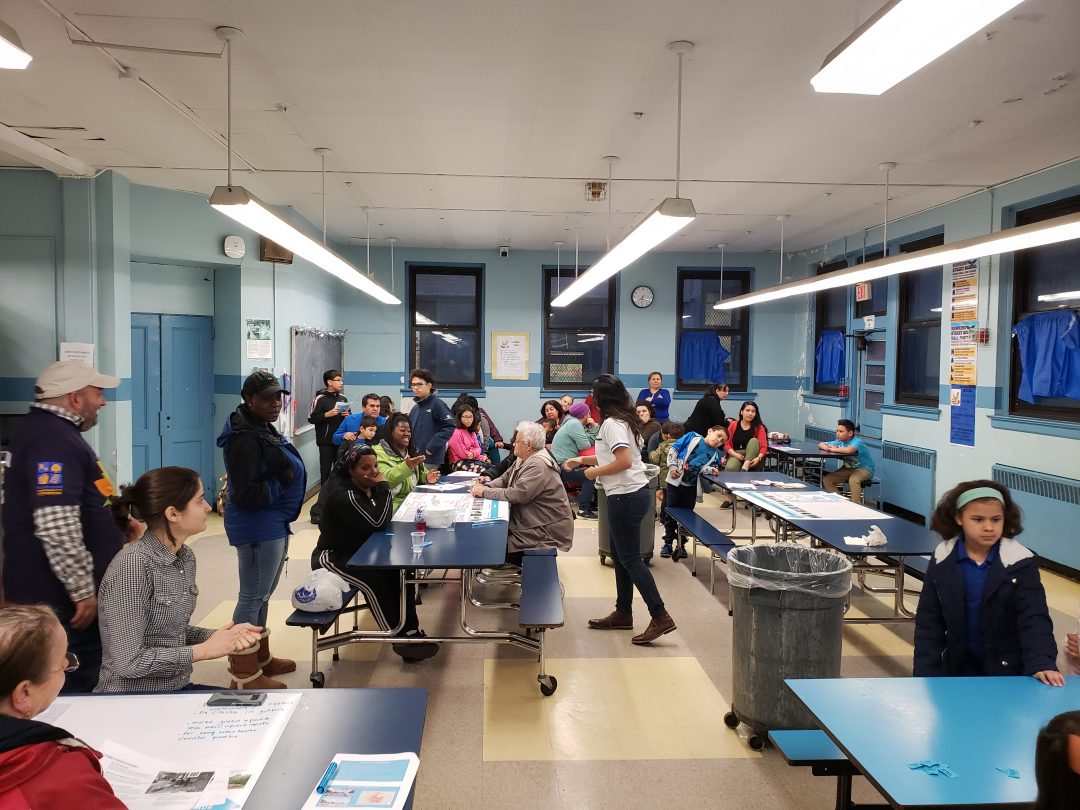
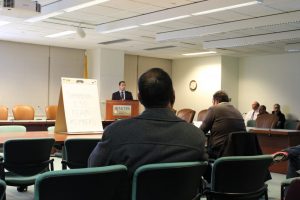
The City of Newark and community organizations are working together to ensure all voices are included in their CSO Long Term Control Plans. A total of 15 meetings were held in Newark in March and April on the options being considered to reduce sewage overflows. The Newark People’s Assembly hosted five public meeting, and community-based and environmental justice organizations including Ironbound Community Corporation (ICC), The New Jersey Environmental Justice Alliance (NJEJA), Clean Water Action, Urban League of Essex County,  La Casa de Don Pedro and Unified Vailsburg Services Organization hosted 10 meetings. In addition, a website was launched to gather even more community feedback.

“In the East Ward, ICC hosted five meetings for the community. The consensus emerged that sewer separation and green infrastructure were the preferred solutions, as fixing CSO issues, like flooding, was a priority,” said Drew Curtis, senior equitable development manager for ICC.

“NJEJA hosted a local tenant association at a community charrette in the Central Ward of Newark. The public event was designed to gather and document the tenants’ priority sites for stormwater management and preferred solution methodologies. City representatives were on hand to observe, learn and participate in the meeting,” said Laureen Boles, state direct for NJEJA.

Newark City Council President Mildred Crump said of the East Ward meeting, “I’m glad I came. The sewage authority is now under my jurisdiction. This subject is rather intriguing.”

Ways To Stop Sewage Overflows

On March 7, after several years of measuring and modeling, representatives from the Clean Waterways, Healthy Neighborhoods coalition gave a presentation on the solutions being evaluated to reduce the sewage overflows for permit holders in the Passaic Valley Sewerage Commission (PVSC) region. Engineering consultant firms presented the evaluation of alternatives for Bayonne, East Newark, Guttenberg, Kearny, Jersey City, Paterson, and the North Bergen Municipal Utilities Authority. (See below for a list of alternative solutions discussed.)

The Sewage-Free Streets and Rivers campaign is asking for public meetings to be held in every one of these towns to ensure that residents are informed about the impacts of sewage overflows and have input into the plans that are being developed, their costs, and the benefits or impacts the plans will have in the community. Residents who live in live in a municipality where no public meetings have been held on the evaluation of alternatives, should ask their city or sewer utility to share its plans, explain the alternatives and make sure the ideas and concerns of the community are included. Newark and Jersey City have scheduled presentations about the solutions under consideration in those municipalities, and Guttenberg and Kearny indicated that they will schedule additional meetings

“This will possibly be the largest capital expenditure in each municipality’s history,” said Michael Hope, the Greeley and Hansen consultant working on the Passaic Valley Sewerage Long Term Control Plan. “A Long Term Control Plan cost New York City $4.2 billion.”

Town by Town

In his article “Combating Sewage Overflows,” Mike Montemarano reported on the meeting and the presentations that were given for Bayonne (which has 28 outfalls, or pipes from which combined sewage overflows into the Newark Bay, Kill Van Kull and New York Bay, North Bergen (one outfall), Jersey City (21 outfalls) and Guttenberg (one outfall).

Among the remaining towns in the region:

  • East Newark (one outfall) is a densely populated and heavily developed town, and is focusing on gray solutions including underground tanks, disinfection and an expansion of its sewer treatment plant.
  • Kearny (five outfalls) is planning a partial sewer separation and underground storage. The town is also evaluating potential green infrastructure projects that were identified by Rutgers in its Green Infrastructure Feasibility Study for Kearny and sites identified by the Kearny AWAKE group.
  • Paterson (23 outfalls) is looking at gray solutions including sewer modification, tunnels, offline-storage, disinfection, and sewer separation, and green infrastructure solutions that are estimated to reduce overflows by between 3 percent and 6 percent..
  • Newark (18 outfalls) and Harrison (seven outfalls) did not have time to present.

The next meeting is planned for May.

Full presentations for each of the towns are posted on the Clean Waterways, Healthy Neighborhoods site.

Public meetings

The City of Newark is working with community partners to host a series of public meetings to gather community input on the evaluation of alternatives. Newark Stormwater Solutions is a dedicated website developed to gather community input on the evaluation of alternatives, and their community presentation is available for download in English, Spanish and Portuguese.  

The Jersey City Municipal Utilities Authority is also hosting public meetings. It has a web page devoted to the Long Term Control Plan, including a survey to gather community input on the proposed alternatives to combined sewer overflows.

What are the options being considered to reduce overflows?

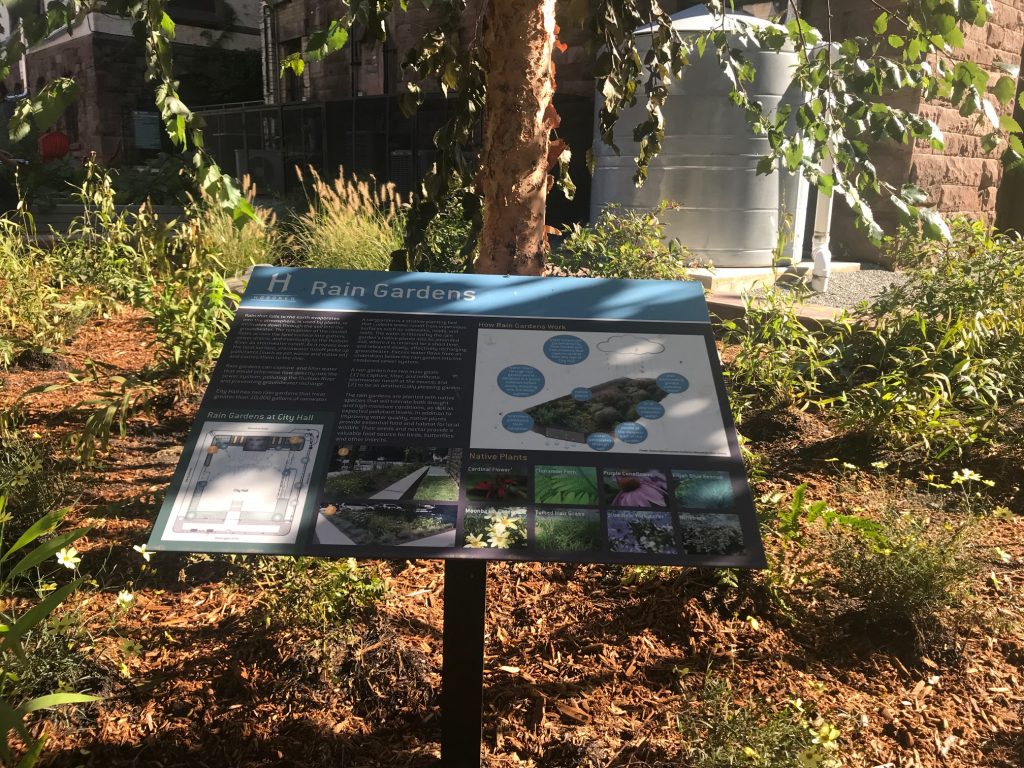
  • Green infrastructure: Nature-based solutions, like rain gardens and permeable pavement, that capture stormwater where it falls, allowing it to absorb into the ground or be saved for later use before it enters the combined sewer system. These options reduce total storm flows or peak flows.
  • Increased storage capacity in the collection system: Storing sewage and stormwater in the existing pipes or new storage structures (e.g., storage tunnels, underground or above-ground tanks) during a rainstorm allows it to be released to the sewage treatment plant slowly following the storm. Increased storage capacity can also come from cleaning existing combined sewers to reduce blockages and filled areas.
  • Sewer treatment plant expansion and/or increased storage at the plant: Identifying opportunities to build more storage at the sewer treatment plant or build more capacity to process sewage and stormwater at the plant.
  • Infiltration and inflow reduction: Fixing the combined sewers to reduce the amount of water that infiltrates into the pipes from cracks.
  • Sewer separation: Adding a separate pipe system for stormwater that will discharge directly to a stream or river, which will reduce the volume in the sewage pipes that go to the treatment plant.
  • End-of-pipe treatment of the CSO discharge: Adding sewage treatment, including disinfection, at the end of the outfall pipes.
  • CSO-related bypass of the secondary treatment step at the sewer treatment plant: Creating more capacity at the sewer treatment plant by bypassing the secondary treatment of the mixture of sewage and stormwater. This approach results in partial treatment of the combined sewer flows during storms, rather than complete treatment of part of the flow and no treatment of the overflows.

What Happens When You Flush the Toilet?

by Kyrsten Ramkishun

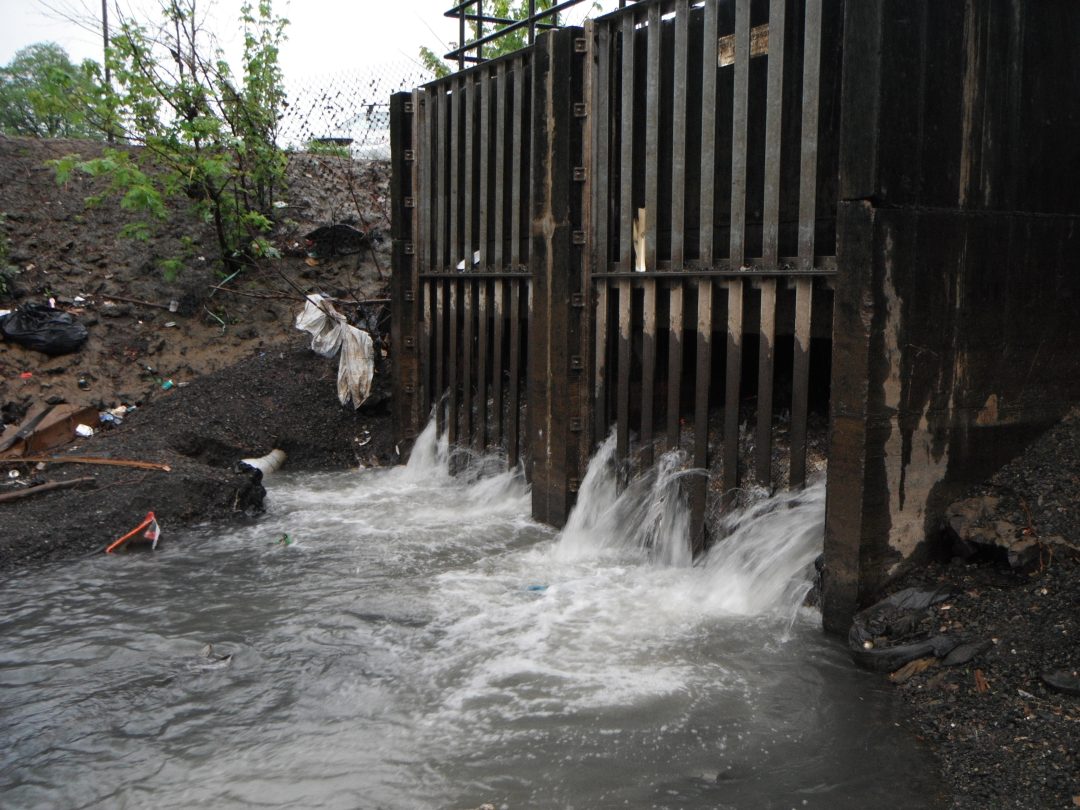
What happens when you flush the toilet? Mary Anna Evans answers  this question in her article, “Flushing the Toilet has Never been Risker.” One of the main issues she discusses is the collision of aging combined sewer systems and a growing population. Combined sewer systems collect human waste, industrial waste, and stormwater runoff into a single pipe for treatment and disposal. When stormwater enters the sewer system, it can cause an overflow, which means that instead of the collected waste going into a treatment plant, the untreated raw sewage enters into bodies of water, including those that are sources of drinking water or used for recreational purposes such as swimming or fishing. Overflows can also back up onto streets and in peoples’ houses and businesses, and can carry phosphorus and nitrogen into waterways, creating serious surface water problems such as algae blooms, fish kills, and dead zones like the one in the Gulf of Mexico.
Not only have there been problems with overcapacity, but these old pipes also leak and are being clogged with debris or even congealed cooking oil which narrows the pipes and reduces the amount of water and sewage they can carry.

The solutions Evans points to can be made on a system level and on an individual level. System-level improvements include creating storage projects and putting more tunnels underground, as well as green technology such as rain gardens and green roofs. Green solutions help because the water is absorbed into the ground where it falls and does not become runoff.  On an individual level, people should be thinking about reducing their water usage, and educating themselves about what to avoid using that can pollute stormwater runoff and clog the sewer system.

Newark People’s Assembly Community Meetings on Combined Sewer Overflows

By Kyrsten Ramkishun

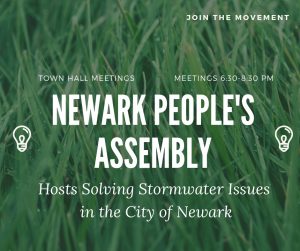
Newark People’s Assembly, a new initiative launched by the city, is hosting a series of town-hall meetings to discuss alternative ways to solve the stormwater and sewage overflow issues in the City of Newark. There will be 10 community meetings in total, two in each of Newark’s five wards. Drew Curtis, the senior equitable development manager of Ironbound Community Corporation, who is organizing these meetings with the city, said he wants “to ensure real and authentic feedback from residents on the alternative ways to solve stormwater and Combined Sewer Overflow issues.” The main topics to be discussed during these meetings will be flooding, water quality, litter and illegal dumping, bad smells, and affordability of the different alternatives.  
According to the Newark People’s Assembly website, the initiative wants to “bridge the gap between the community and City Hall.” “This will enable Newark’s decision makers to consider the opinion of the stakeholders when considering and/or deciding programs, projects, initiatives, and development that may impact their lives.”

Newark Stormwater Solutions is a dedicated website for Newark residents to get updates on community meetings, provide input on the evaluation of alternatives, and download the community presentations in English, Spanish and Portuguese.  

What Is Green Infrastructure?


Green infrastructure (GI) is a technique that is being used to reduce runoff and sewage overflows in communities with combined sewer systems. But what is it? And how does it work?

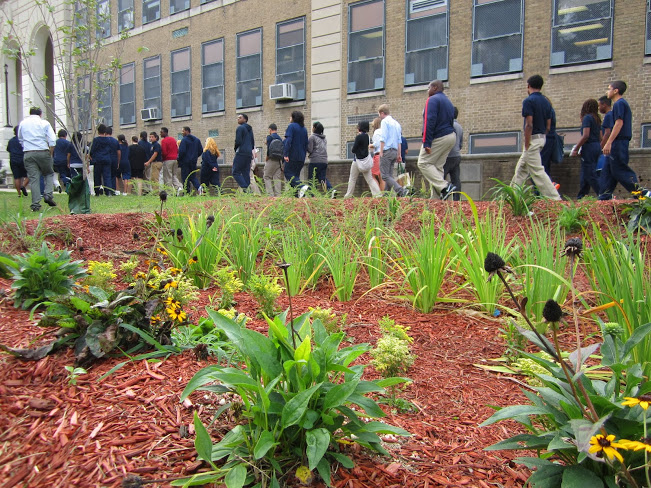
Donna Liu, Civic Story media manager, explains the basics of GI and how it is being used to tackle flooding issues in cities with combined sewer systems in her blog post, Green Infrastructure is coming of age, and it’s time to demystify it:  “A bioswale, similar to a rain garden, is a landscape element designed to soak up stormwater runoff and remove pollution. In other words, a bioswale is one of several new tools deployed by green infrastructure engineers to mitigate the effects of stormwater overflows in our cities.”

Liu covered the Green Infrastructure and Transportation conference hosted by the North Jersey Transportation Planning Authority in Newark on Feb. 6, 2019, that was co-organized by Together North Jersey and Jersey Water Works.  Highlighted at the conference were innovative designs and plans like the American Street Improvement project in Philadelphia, a two-mile project that improves pedestrian safety through street design and reduces stormwater runoff using medians with green infrastructure.  

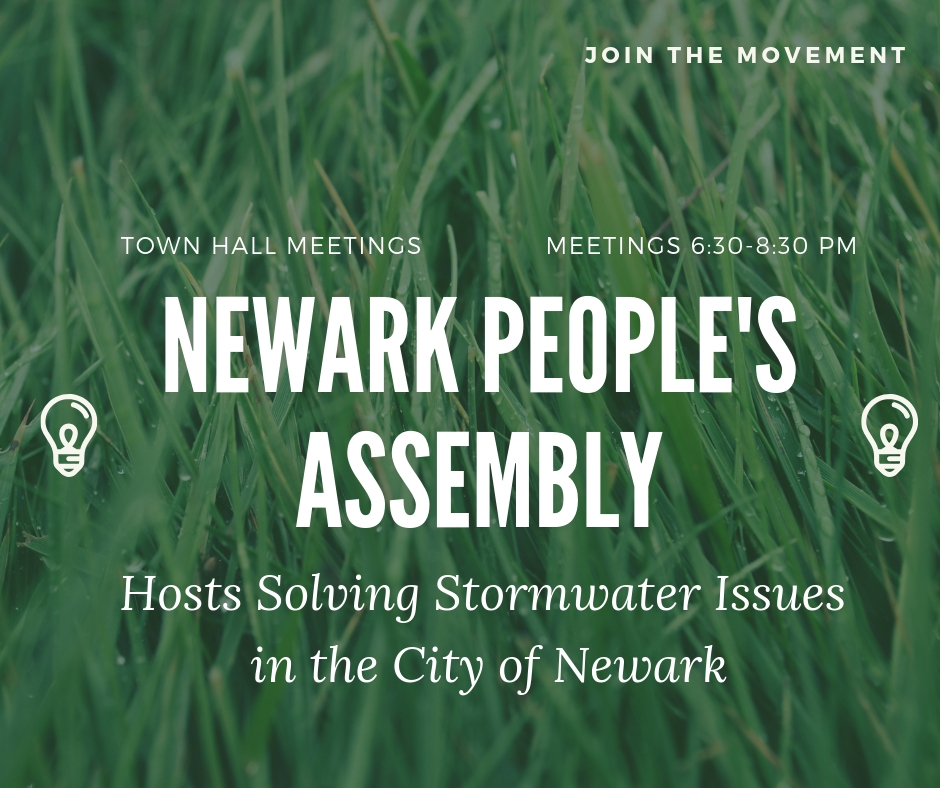
Hoboken’s 2017 Master Plan’s Green Building and Environmental Sustainability Element, which includes a robust community engagement process, mapped the city to identify the best places for different types of green infrastructure. Hoboken’s GI strategic plan provides a framework for implementation based on three zones. A gray zone indicates it is more suitable for above-ground implementation like green roofs, a green zone for vegetated practices like rain gardens, and a blue zone for stormwater detention such as subsurface storage.

New York City created an Office of Green Infrastructure that includes a rain garden hotline number and rain-garden-specific email, as well as maps and photos and lots of information. One of the initiatives from New York described at the conference by Vincent Lee, Associate principal at the engineering and design company Arup, was to install 200 bioswales in the neighborhood of Newtown Creek.  Lee stressed that as important as in identifying the locations for these projects was community buy-in.

More on the conference and the full Donna Liu’s full blog post here.